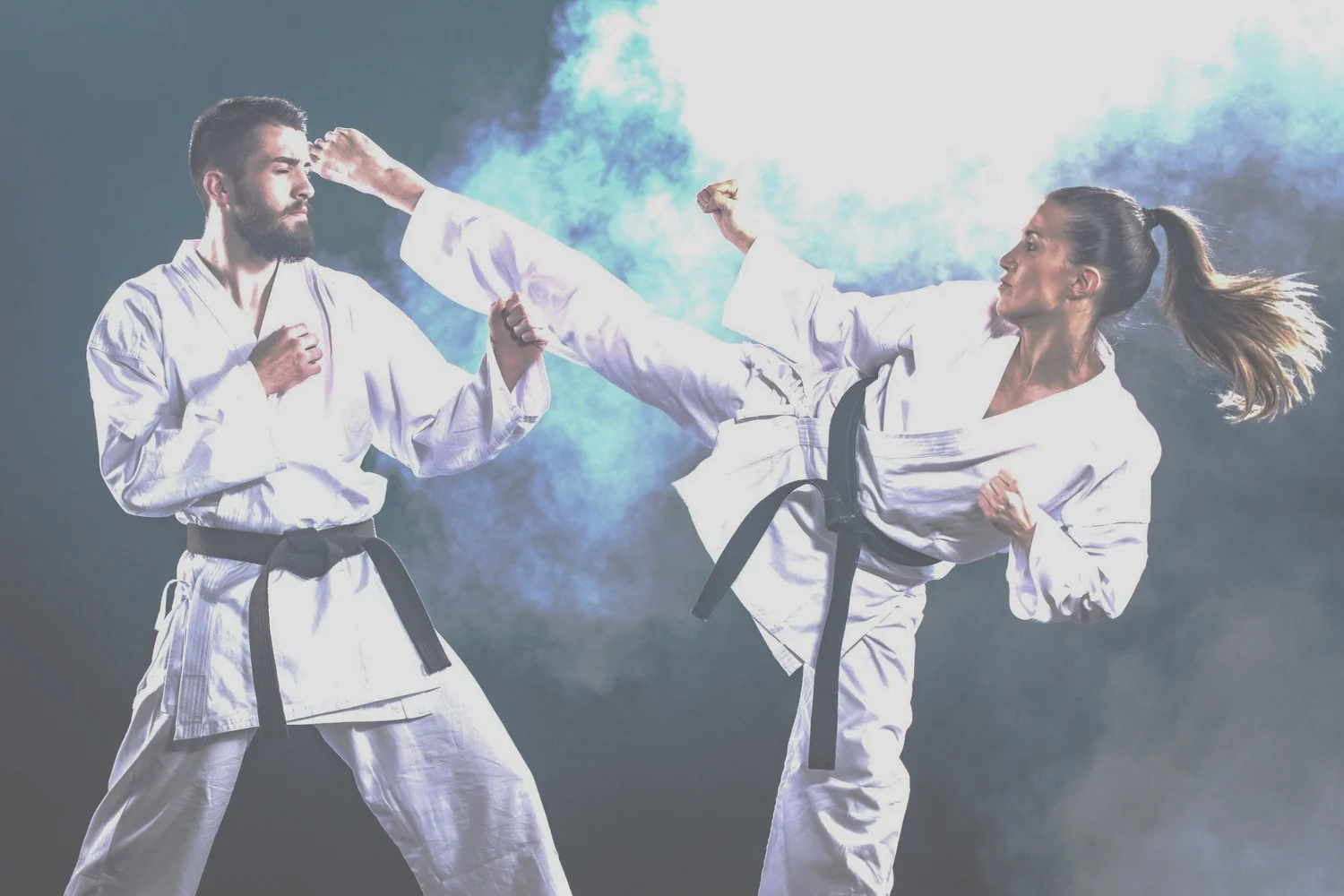
The Advanced Art
A Related, Distinct Art
Alongside Matsumura Seitō Shōrin-ryū, we teach Hakutsuru — Okinawan White Crane. The two arts share the same stances and the same core philosophy, but White Crane is its own study: different kata, different applications, and different targets.
It's a refined art — precisely aimed and built to end a confrontation quickly. Because it relies on structure, timing, and precision rather than size or strength, it is the art our most experienced students grow into, and a place where a smaller or older practitioner can truly excel.
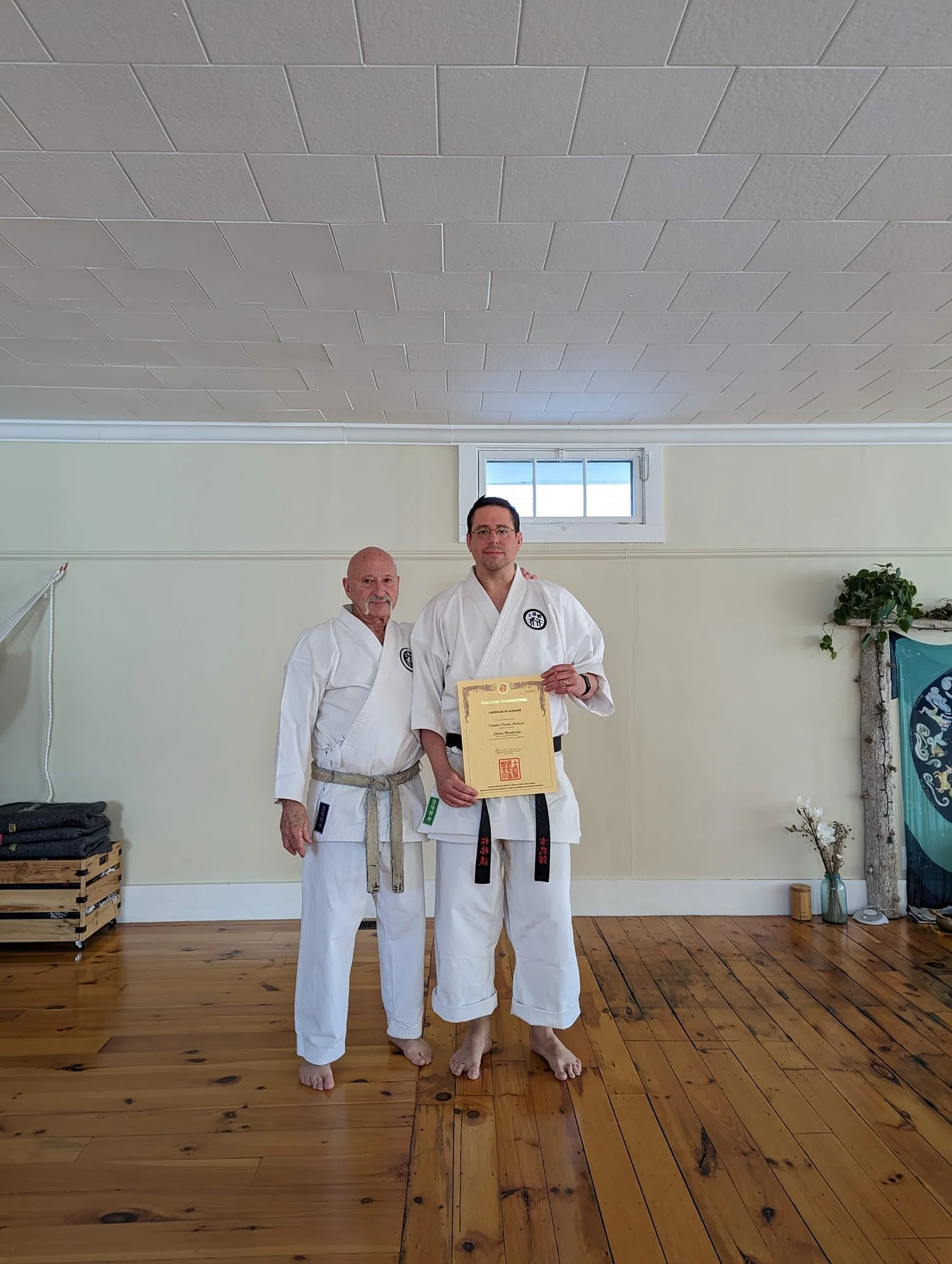
From Fujian to Okinawa
White Crane originates in Fujian, China — an art of close-range striking, balance, and precision, famous for power that flows from soft to hard. Tradition attributes it to Fang Qiniang, and over time it branched into several distinct lines.
Through centuries of trade and cultural exchange, Crane principles were carried into Okinawa and woven into its karate. They survive today as the Hakutsuru kata — a preserved thread of the older, Chinese-influenced Okinawan tradition.
We practice the light crane: evasive, mobile, and subtle, rather than rooted and tension-based — upright in posture and continuous in motion.
How It Moves
Where Shōrin-ryū gives a student movement, timing, and tactical delivery, White Crane refines all of it inward — toward economy, precision, and control at close range.
Because none of this depends on being the bigger or stronger person, White Crane rewards the patient, experienced student above all.
The Curriculum
Studied after a solid Shōrin-ryū foundation, these forms carry the crane's principles within an Okinawan structure.
A Living Transmission
A legitimate, low-visibility line preserving older Okinawan karate with its crane influence intact.
Go Deeper
White Crane isn't a beginner's course — it's where the journey leads. Build your foundation in Shōrin-ryū, and the crane will be waiting. Come watch a class and see where the path goes.